Close your raffle
Ending ticket sales — when it happens automatically, and when you do it yourself.
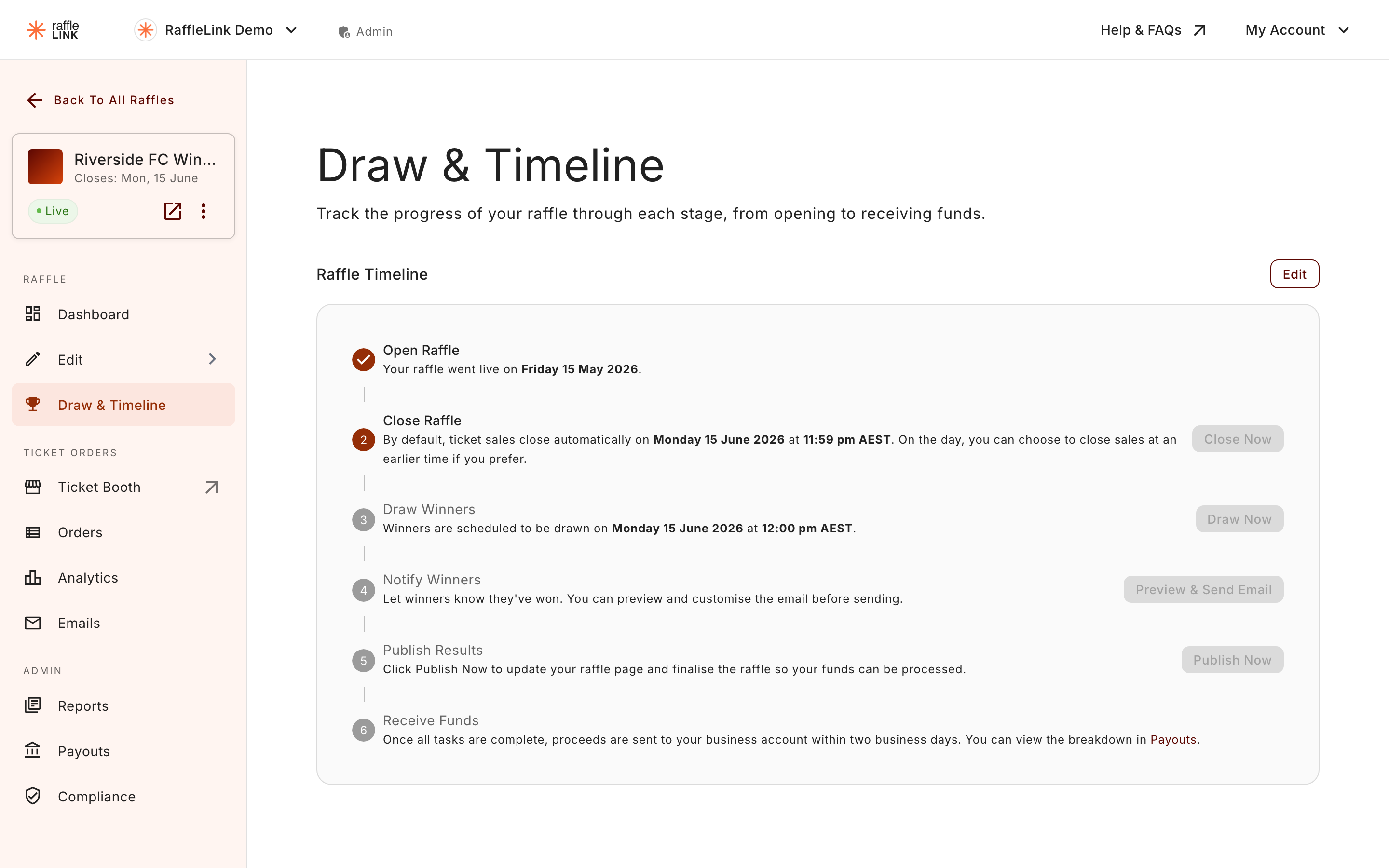
Before you can draw a winner, ticket sales have to close. Closing moves your raffle from open to awaiting draw. It can happen on its own when your raffle's end conditions are met, or you can close it yourself.
Automatic close
In the normal course of things, your raffle closes itself when one of these happens:
- The end date passes.
- The draw time is reached.
- Every ticket sells out.
When that happens, you'll get an email letting you know your raffle has closed and is awaiting its draw — your cue to get ready.
Close it yourself ("Close now")
You can also close sales early from the Draw & Timeline tab with Close now — useful if you've hit your goal, the event's wrapping up, or you simply want to draw sooner.
What closing does (and doesn't do)
- It stops new ticket sales immediately.
- It does not draw the winner. Closing and drawing are two separate steps — your raffle sits in awaiting draw until you choose to run the draw.
- Tickets already sold are unaffected; everyone who bought in is in the draw.
A reopen can happen on its own
Occasionally a raffle that sold out reopens — for example, when buyers reserved tickets but didn't complete payment, freeing those tickets up again. If that happens you'll be notified. It's normal, and it just means a few more tickets became available. If your raffle closed before you were ready and you want to bring it back yourself, see Reopen a closed raffle.
Timing your close
Try to draw reasonably close to your scheduled draw time — your ticket buyers were told roughly when to expect a winner, and some states have rules about how long after closing you can draw (VIC, for instance, expects the draw within a set window). You don't have to be precise to the minute, but don't close and then leave it for weeks.